
Wall insulation in Dallas TX - every cavity packed full through small holes
Cold outside walls and rooms that never feel right usually mean empty cavities. We fill them through small holes and patch what we drill.
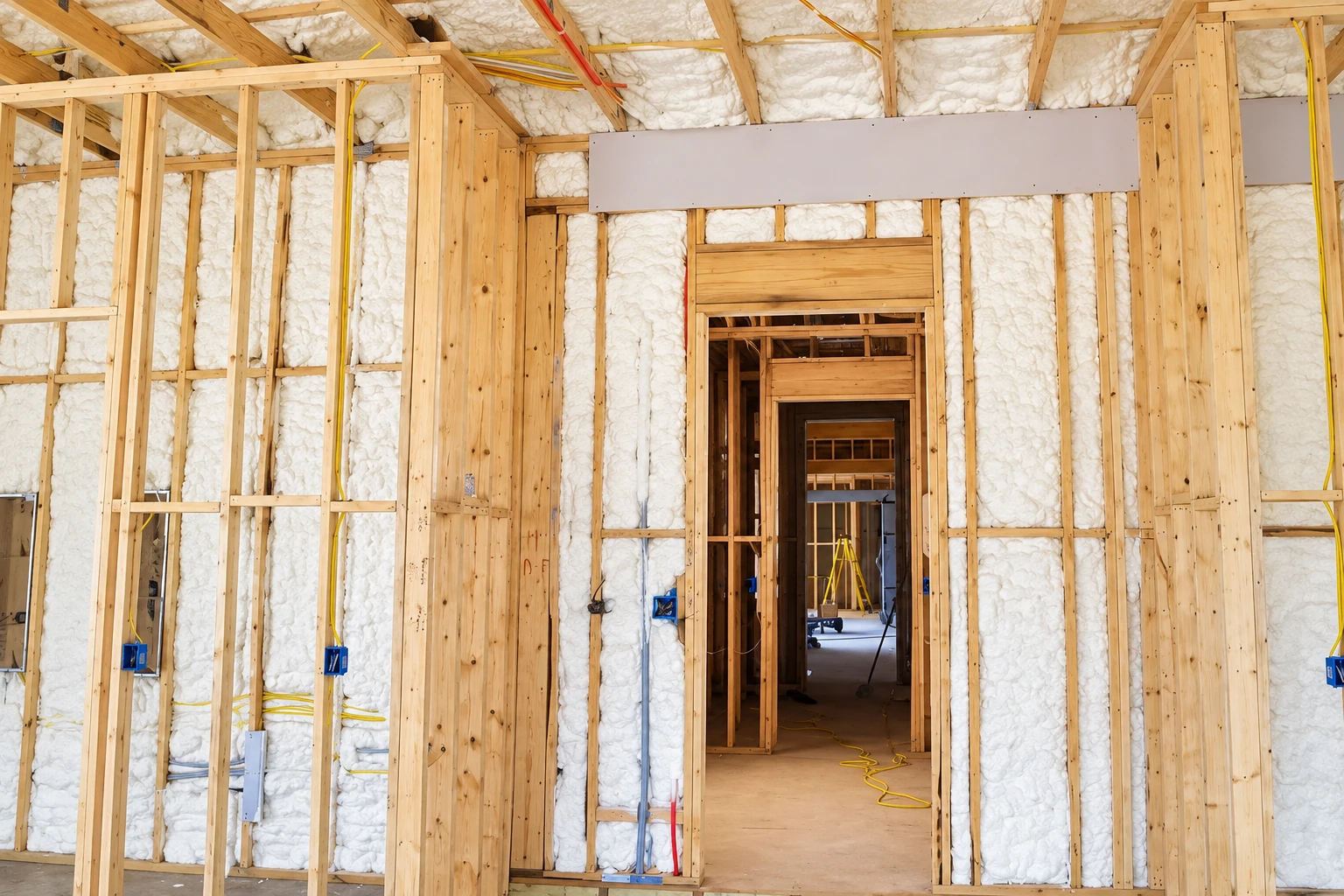
How do you insulate the walls of a finished Dallas house?
Wall insulation in Dallas, TX on a house that's already built is usually done by drill and fill. We drill small holes near the top of each wall cavity and fill it with blown-in insulation, which is loose fill sent through a hose and packed in tight. You end up with full walls and rooms that hold their temperature, and the drywall stays where it is.
A lot of the older houses we see in Dallas and the cities around it have outside walls that are empty, half full or settled to the bottom, and that's usually why the back bedroom never matches the thermostat. What moves the price is how many walls we fill, which material goes in and what's on the outside, because siding, brick and stucco each change where we drill and what gets patched. The schedule turns on what I find first, like old wiring that has to be dealt with or a permit the city wants before we start. If the drafts come mostly from gaps around outlets, windows and trim, air sealing services, closing those gaps before insulating, may do more for you than filling walls, and if the cold comes up through the floor, look at basement insulation instead.
How can you tell your walls need insulation?
Walls don't announce it. Most people notice a room, a draft or a cold patch first, and these are the things that usually send them our way.
Outside walls feel cold to the touch in winter, which usually means the cavity behind them is empty.
One room stays hotter or colder than the rest, often because its outside walls were never filled.
You feel air moving at outlets and switch plates on outside walls, a sign of bare, leaky cavities.
The top of a wall feels colder than the bottom, which usually means old insulation slumped down.
The power bill stays high even after the attic was done, so heat may be moving through the walls.
You pulled a switch plate on an outside wall and saw nothing but an empty cavity behind the box.
If a few of these sound like your house, call before you buy anything, because I'd rather look and tell you a job isn't needed than guess.
What happens when you call us about wall insulation in Dallas?
Here's how a wall job runs with us, from the first call to the walk-through, and who you'll be dealing with at each step.
Call or send a request
Call (214) 706-4099 or use the form on this page, and we'll set a time for me to come out. Weekends work too, since we're open Saturday and Sunday.
I check the walls first
I look at the outside finish, the wiring and anything else that has to be dealt with before insulation goes in. You get a written estimate that says which walls, which material and whether we drill from inside or out, so you know the number before anyone drills a hole.
Our crew fills and patches
The crew drills the holes, dense packs each cavity and patches every hole they made. Then they clean up before they pack the truck.
I walk the job with you
Before we call it done, I check the work and walk it with you, wall by wall. Satisfaction guaranteed.
Get a written estimate for your outside walls
Send the form and we'll reply within one business day to set up a visit. I come out, look at the walls and give you a free written estimate, with no obligation to go ahead.
- Call
- (214) 706-4099
- Hours
- Mon–Fri: 8 AM–9 PM, Sat–Sun: 6 AM–9 PM
Dense packing, drill spots and older house checks
For closed walls, dense-packed cellulose or fiberglass is the way to go. Blown in tight until the cavity is full, it can't settle into a gap at the top of the wall, and it slows the air moving through, so the wall insulates the same from floor to ceiling. Loose fill that's just poured in tends to slump, and that slump is the cold strip you feel near the ceiling.
The outside finish decides where we drill. On siding, drilling from outside usually makes sense because siding patches easier than drywall or plaster, but it cuts through the drainage plane, the layer behind the siding that sheds water, and that has to be patched or replaced. On brick and stucco we drill from inside, which is standard and leaves that layer alone.
If your house was built before 1980, the first step is a look at what's in and on the walls. Federal guidance for this work says to mind lead safety rules when disturbing walls that old, and the National Electrical Code doesn't allow insulation on or around knob and tube wiring, the old system strung on porcelain knobs. Packing insulation over it just hides the problem until it's someone else's.
Wall insulation questions we hear in Dallas
How much does it cost to insulate walls in Dallas?
Adding or replacing insulation in the Dallas area usually costs about $1,500 to $4,900 per job. That's the going range for insulation work around here, not our price. Your own number comes in writing after I've seen the walls.
How do I insulate walls without removing drywall?
You don't have to remove it, because the insulation goes in through the small holes we drill and patch. A thorough job also reaches the tight spots above doors, above and below windows, and behind cabinets on outside walls, so ask any contractor whether they cover each one. If a bathroom sits on an outside wall, a few tiles may have to come off before we drill.
Is cellulose or fiberglass better for insulating existing walls?
Both work well dense packed, and the real difference is how they handle water. Cellulose breaks down if it gets soaked, while fiberglass is lighter and isn't ruined if it gets wet. If a wall has a history of leaks, that matters, and I'd want the leak fixed before either one goes in.
Will wall insulation make a mess inside my house?
Not much, when it's done right. On inside work we cover the floors under each wall we're drilling and keep the dust contained to the spot we're working, so it doesn't drift through the house.
Do I need a permit to insulate walls in Dallas?
It depends on the job, so we check with the city's building office before we start. The City of Dallas issues residential permits for construction, renovation and major repairs, and when a job needs one, we handle the application and the inspections. Under a remodel permit, city staff sign off on the energy forms and a compliance certificate is required before the final inspection, and we're licensed and insured for the work.
What is the best time to insulate exterior walls?
If you're re-siding, that's the best time, because with the siding off we can fill the walls from outside and check or add house wrap behind it. It's also the chance to put rigid foam board on the outside, along with the filled cavities or in place of them.
Other insulation work that pairs with walls
Air sealing services
If drafts still sneak in around the attic hatch, pipes and recessed lights after the walls are full, sealing those gaps stops the air the insulation can't.
Basement insulation
If your floors stay cold or the space below the house feels damp, insulating the basement walls can matter more than adding anything to the upper walls.
Have us check your walls first
Call Steadfast Dallas Spray Foam Insulation at (214) 706-4099 or send a request with the year your house was built and what's on the outside walls, because those two answers tell me most of what your job involves.
Mon–Fri: 8 AM–9 PM, Sat–Sun: 6 AM–9 PM