
Vapor barrier installation in Dallas TX - a crawl space that stays dry under your floors
Musty smell, damp dirt or torn plastic under the house? We fix what's wrong first, then put down a sealed barrier that covers the ground.
Do you need a vapor barrier in your Dallas crawl space?
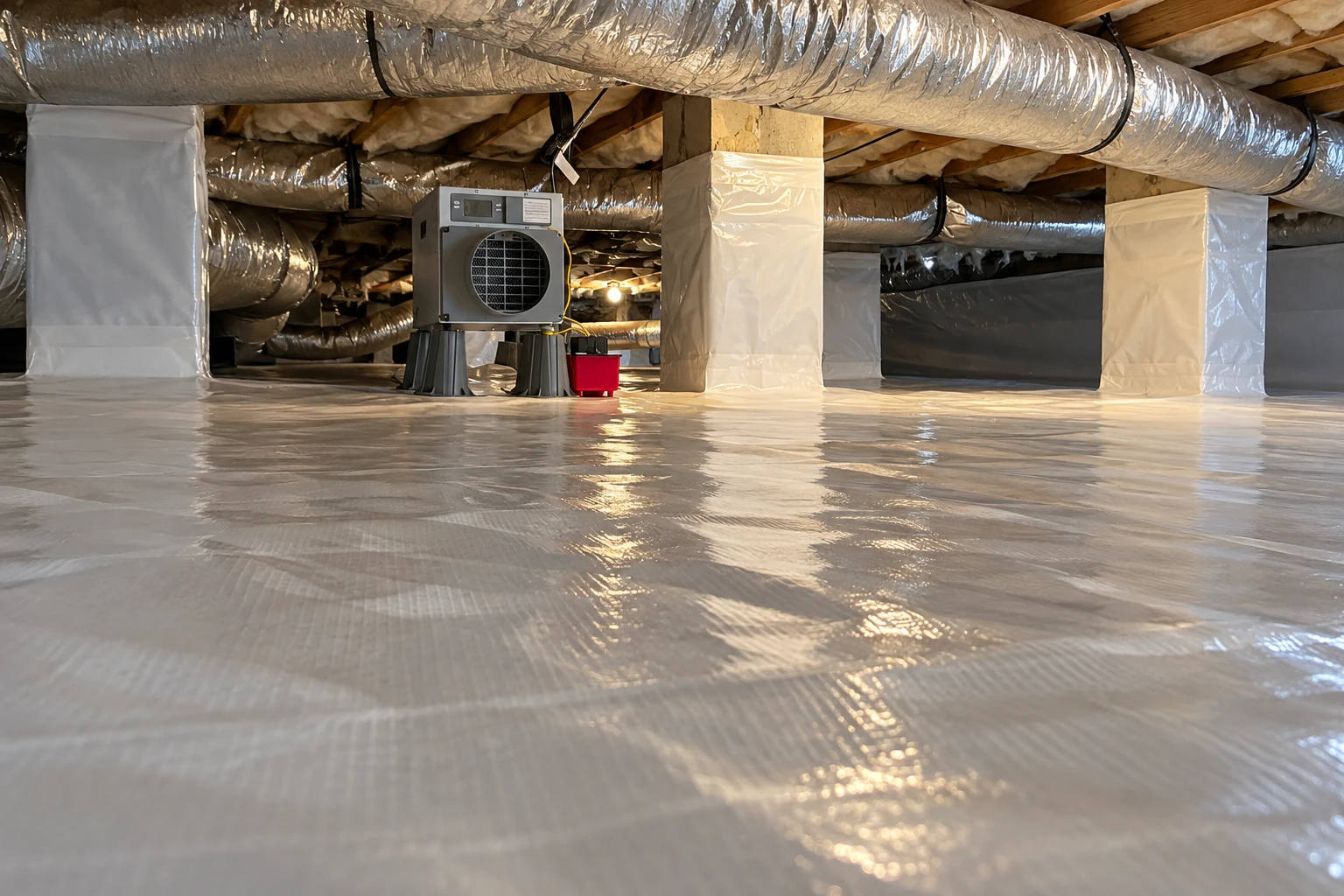
Vapor barrier installation in Dallas means laying a plastic cover over the dirt floor of your crawl space and running it up the walls, columns and footings until the ground is covered, or as close to all of it as the space allows, so ground moisture stays out of the framing and the house above it.
Most people call because the house smells musty, the floors run cold or the old plastic under the house has torn or slipped. The price and the schedule mostly turn on how big the crawl space is, how hard it is to move around in, and whether there's water, mold or rot to deal with before anything goes down, and if the drafts are also coming from above, attic air sealing often belongs in the same plan. We're based in Dallas and work across the city and the cities around it, and my written estimate gives you the number for your own crawl space.
How do you know your crawl space needs a vapor barrier?
Most folks don't go under the house until something upstairs tells them to. These are the things that usually send people to the crawl space, and what each one tends to mean.
A musty smell inside the house usually means damp air is rising from the crawl space below.
Puddles or wet dirt under the house after rain point to water getting in, not just vapor.
Old plastic that's torn, bunched up or loose from the walls has stopped covering the ground.
White fuzz or dark spots on the floor joists usually mean moisture has been sitting on the wood.
Insulation sagging or falling from under the floor is often holding water it was never meant to hold.
Cold floors and a power bill that keeps climbing often trace back to a damp, drafty crawl space.
If you see standing water or mold under the house, call (214) 706-4099 now instead of waiting, because neither one gets better on its own.
What happens when you call us about a crawl space barrier?
I come out myself to look and write the estimate, and our crew does the install. Here's how a vapor barrier job usually runs from the first call to the final walk-through.
Call or send a request
Call (214) 706-4099 or use the form, and tell us roughly how big the crawl space is, whether you've seen water or mold, and whether it has vents. That way I show up ready for what's down there.
I inspect the crawl space
I crawl the space and check for water, mold, rot or anything else that has to be handled before plastic goes down. You get a written estimate that lists each part of the job separately, so you can see exactly what's driving the price.
Our crew installs the barrier
Our crew takes care of anything that has to come first, then lays the plastic across the floor and up the walls and piers and seals it. We clean up the crawl space and the work area before we leave.
We walk the finished job
I check the crew's work, then go over the finished crawl space with you before we call it done. Satisfaction guaranteed.
Get a written estimate for your crawl space barrier
Send the form and we'll reply within one business day to set up a time. I'll come out, look at the crawl space and give you a free written estimate, with no obligation.
- Call
- (214) 706-4099
- Hours
- Mon–Fri: 8 AM–9 PM, Sat–Sun: 6 AM–9 PM
Plastic, seams and the choices under your house
Not all plastic is the same. Federal guidance on crawl space covers sets a minimum thickness and a low vapor rating for the sheet, so ask any contractor, us included, which plastic a quote is for. Thin sheeting tears the first time someone crawls over it to reach a pipe, and after that it covers less ground every year.
How it's put down matters as much as what it is. A cover with open seams and loose edges lets ground moisture slip around it, which is why federal guidance describes taping every seam and fastening the sheet to the walls and piers, and you can ask whether a crew does both. Before we start, clear stored boxes and junk out of the crawl space so the cover can reach the whole floor.
People often mix two things up. A barrier on the crawl space floor isn't the same as a vapor retarder in your walls, and an insulation trade group warns that the kind that lets almost no vapor through can cause moisture problems inside walls in warmer climate zones. If you're also adding insulation to an older house, retrofit insulation is where we sort out what belongs in the walls.
Vapor barrier questions from Dallas homeowners
How much does crawl space encapsulation cost in Dallas?
Crawl space encapsulation across the US usually costs about $5,000 to $15,000 per job, and that's the market's range, not a quote from us. The cost per square foot goes up when the job needs real cleaning, repairs or added features like sealed vents, so a simple cover over a dry crawl space costs less than one that needs work first. I'll give you a written number for yours after I've been under the house.
Do I need a permit to install a vapor barrier in Dallas?
It may need one, and the city is the one to ask, because Dallas's list of work that needs no permit names insulation but not vapor barriers. We're licensed and insured, we check with the city's building office before we start, and when a job needs a permit we handle the application and the inspections. Houses in historic, conservation or planned development districts have extra requirements, and the city says any electrical work under the house has to be done by a licensed electrician.
How do I know if my old vapor barrier can be repaired?
If the old plastic is mostly intact and just open at the seams or pulled loose from the walls, it can be patched with tape, but a new sealed layer laid over it holds up better. I'll look at what's down there and tell you which one makes sense, and if a repair is enough, I'll say so.
What should be fixed before a new vapor barrier goes in?
Standing water, mold, rotten wood and any hazardous materials should be dealt with before new plastic goes down, because a cover laid over them just hides them. On our jobs, water, mold and rot get handled first, as their own step. If I find anything hazardous, I'll tell you plainly so that cleanup can be planned ahead of the barrier work.
What causes moisture in a crawl space?
In a vented crawl space, most of the moisture is liquid water getting in, usually from poor grading around the house, missing drainage or how the yard gets watered. That's why the plastic is only one part of a dry crawl space, and grading and drainage belong in the same plan. I'll point out where water is getting in while I'm under the house.
Should I seal my crawl space vents when I put in a vapor barrier?
It's worth asking about, because in humid climates the outside air coming through crawl space vents can carry water vapor that condenses on the cooler framing under the floor. Building scientists recommend insulated, unvented crawl spaces in those climates, so it makes sense to look at the vents along with the ground cover. We'll talk through whether it fits your house when I'm out there.
Related services that pair with a crawl space barrier
Attic air sealing
Drafts in an older house usually come from both ends, so sealing gaps around lights, pipes and the attic hatch stops conditioned air leaking out the top.
Retrofit insulation
If your house went up with thin insulation, adding more to the existing walls, floors and attic makes sense once the crawl space is dry.
Get your crawl space looked at
Call (214) 706-4099 or send a request, because plastic laid over a wet or moldy crawl space just hides the problem, and I'd rather find it before you pay for a cover.
Mon–Fri: 8 AM–9 PM, Sat–Sun: 6 AM–9 PM