
Commercial insulation in Dallas, TX - sealed seams and dry steel in your building
Drips off the roof panels, rust on the framing and a shop you can't keep cool? We seal the seams and keep moisture off the steel.
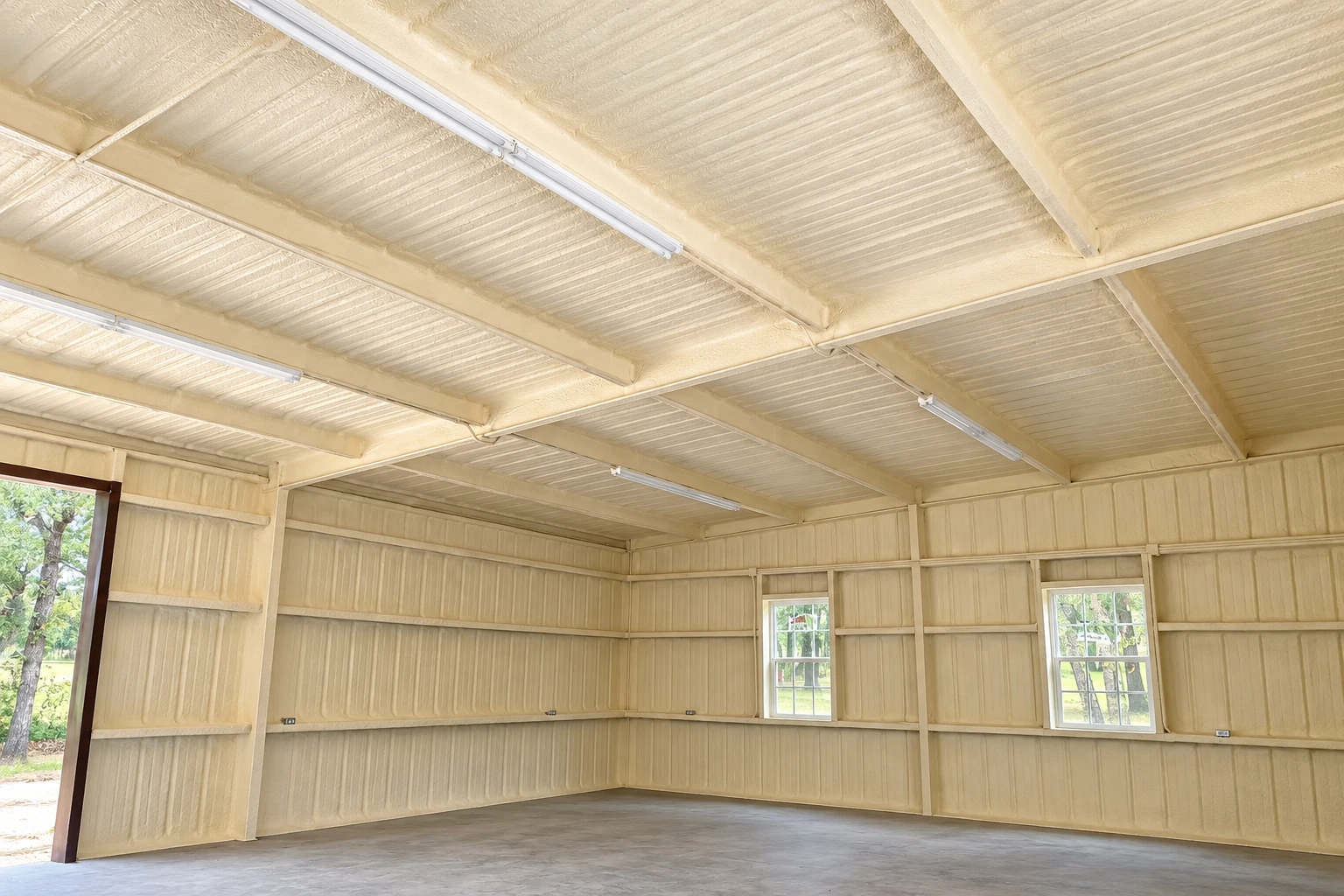
How should a commercial building in Dallas be insulated?
Commercial insulation in Dallas means adding batts, blown-in fiberglass or cellulose, spray foam or rigid foam to a building's walls, ceilings and roof so it holds its temperature. In a metal building it also keeps humid Texas air from condensing on cool steel, which is what leads to rust, mold and damaged stock.
Most of our commercial calls are metal buildings, shops and warehouses, and the owners ask the same two things, how to stop air at the panel seams and how to keep moisture off the steel. The price moves with the size of the building, the material you pick, how high off the floor we're working and whether old or wet insulation has to come out first. The schedule depends on whether the building stays open while we work and whether the city wants a permit for the job. If part of the building sits over a crawl space, a crawl space vapor barrier may belong in the same plan. Your own figure comes from the written estimate after I've walked the building.
How do you know your commercial building needs insulation work?
Commercial buildings rarely announce an insulation problem politely. On a metal building it usually shows up as water, rust or a space that won't hold its temperature, and these are the signs I hear about most.
Water drips from the roof panels on cool mornings, which usually means humid air is hitting bare steel.
Rust on the roof framing or panel screws usually means condensation has been sitting there for a while.
A musty smell or mold in a warehouse or shop usually points to moisture trapped against the metal.
Boxes, tools or stock along the walls come up damp, a sign the walls are sweating behind them.
You can feel drafts or see daylight at the panel seams, so air is moving straight through the skin.
The office or shop floor stays hot all summer with the units running hard, meaning heat is coming through the roof.
Call when you first see drips or rust, because moisture against steel keeps working every humid day, and catching it early usually means less to tear out.
What happens when you call us about a commercial building?
Here's how a commercial job runs with us, from the first call to the final walk-through, so you know who you're dealing with at each step and what you get from each one.
Tell us about the building
Call or send a request with the building type, the areas you want insulated and whether it's a remodel or new construction. That way I show up with the right questions and we can pick a time that works around your tenants or staff.
I inspect and write it up
I look at the roof, walls and seams and check for anything that has to be fixed first, like a roof leak, soaked insulation or bad wiring, because insulation over those just hides them. You get a written estimate that names the material, where it goes and how we'll control moisture, so you can line it up against other bids.
Our crew does the install
Our crew seals the gaps first and insulates second, because batts or foam over an open seam just end up fighting a draft. They clean up when they're done, so the space is ready to use.
We walk the finished job
I walk the finished building with you and check the work myself before we call it done. Satisfaction guaranteed.
Get a written insulation and moisture plan for your building
Send the form and we'll reply within one business day to set a time. I come out, look over the building and give you a free written estimate on site, with no obligation to go ahead.
- Call
- (214) 706-4099
- Hours
- Mon–Fri: 8 AM–9 PM, Sat–Sun: 6 AM–9 PM
Spray foam, fiberglass and radiant barriers for metal buildings
On a metal building, the choice usually comes down to spray foam or fiberglass. In one Texas installer's comparison, spray foam goes on as a liquid and expands into gaps, seams and cavities, while fiberglass does a poor job of sealing air gaps in metal buildings. Foam costs more, but it seals the air while it insulates, and on a building with leaky panel seams or heat coming through the steel framing, I think that's money well spent.
Fiberglass still has its place, and when it's the pick, it has to go in right. It compresses easily and stops working as well when it's crammed in, so ask any contractor how their crew keeps batts and rolls at full thickness. I'd rather tell you foam isn't needed than sell you a bigger job, and on a tight, dry building a careful fiberglass install can be the right call.
A radiant barrier is the other thing people ask about in Texas. It blocks radiant heat, which fiberglass and foam handle poorly, but it works best alongside regular insulation. Treat it as an added layer on top of the plan, not a swap for one.
Commercial insulation questions we hear in Dallas
What is the best way to insulate a metal building in Dallas, spray foam or fiberglass?
Spray foam usually comes out ahead on a metal building with leaky seams, for the sealing reasons covered above. One Texas installer recommends closed-cell foam, a dense foam that blocks moisture, for metal buildings in particular, so ask which foam type each bid uses before you compare prices.
Does my metal building need a vapor barrier?
Yes, it needs vapor control one way or another, because humid Dallas air will find cool steel. Closed-cell spray foam does that job itself, while fiberglass needs a faced product or a separate vapor barrier installation on the warm side. We put the vapor control plan right in the bid so you can see how each contractor handles it.
How much does commercial insulation cost in Dallas?
I can't give you an honest number until I've walked the building, so your figure comes in the written estimate. Foam costs more than fiberglass, and the price climbs when old or wet insulation has to come out first or the crew is working high off the floor. A tight, dry building sometimes needs less than the owner expects, and I'll tell you if that's yours.
What permit does Dallas require before altering a commercial building?
The City of Dallas requires a commercial building permit before anyone builds, alters or renovates a commercial property, and applications are filed through DallasNow. I check with the city's building office before we start, and when a job needs a permit, we handle the application and the inspections. We're licensed and insured.
What energy paperwork does Dallas ask for at the end of a commercial remodel?
On a commercial remodel, the city requires a compliance certificate at the end of the project, and city staff sign off on the energy side before the building's final inspection can be approved. New construction, additions and first-time tenant finish-outs work differently, because their applications include an energy compliance form signed by a registered third-party energy provider. Both come from the city's energy code, the national energy code with Dallas's own changes, and the details are on the city's commercial energy code page.
How do I insulate a new metal building in Dallas?
Plan the insulation before the outer metal skin goes on, because that's when it's easiest to get right. The traditional way is for the erector, the crew putting up the building, to drape faced fiberglass rolls over the frame before the skin is installed. If you're weighing foam instead, call while the building is still on paper so the insulation and moisture plan fit the erector's schedule.
Moisture control services that pair with commercial insulation
Crawl space vapor barrier
If your building or an attached office sits over a crawl space, a ground cover down there keeps damp soil air from working up into the floors.
Vapor barrier installation
If your building is getting fiberglass rather than closed-cell foam, a properly placed vapor barrier is the piece that keeps the steel dry behind it.
Get your building's moisture plan in writing
We're based in Dallas and work across the city and the cities around it, so call (214) 706-4099 or send a request and get a plan you can hold up against any other bid before the next humid stretch.
Mon–Fri: 8 AM–9 PM, Sat–Sun: 6 AM–9 PM