
Crawl space vapor barrier in Dallas TX - a drier crawl space under your house
Musty smell, damp dirt or torn old plastic under the house? We fix how water gets in, then cover the ground wall to wall.
What does a crawl space vapor barrier do for a Dallas house?
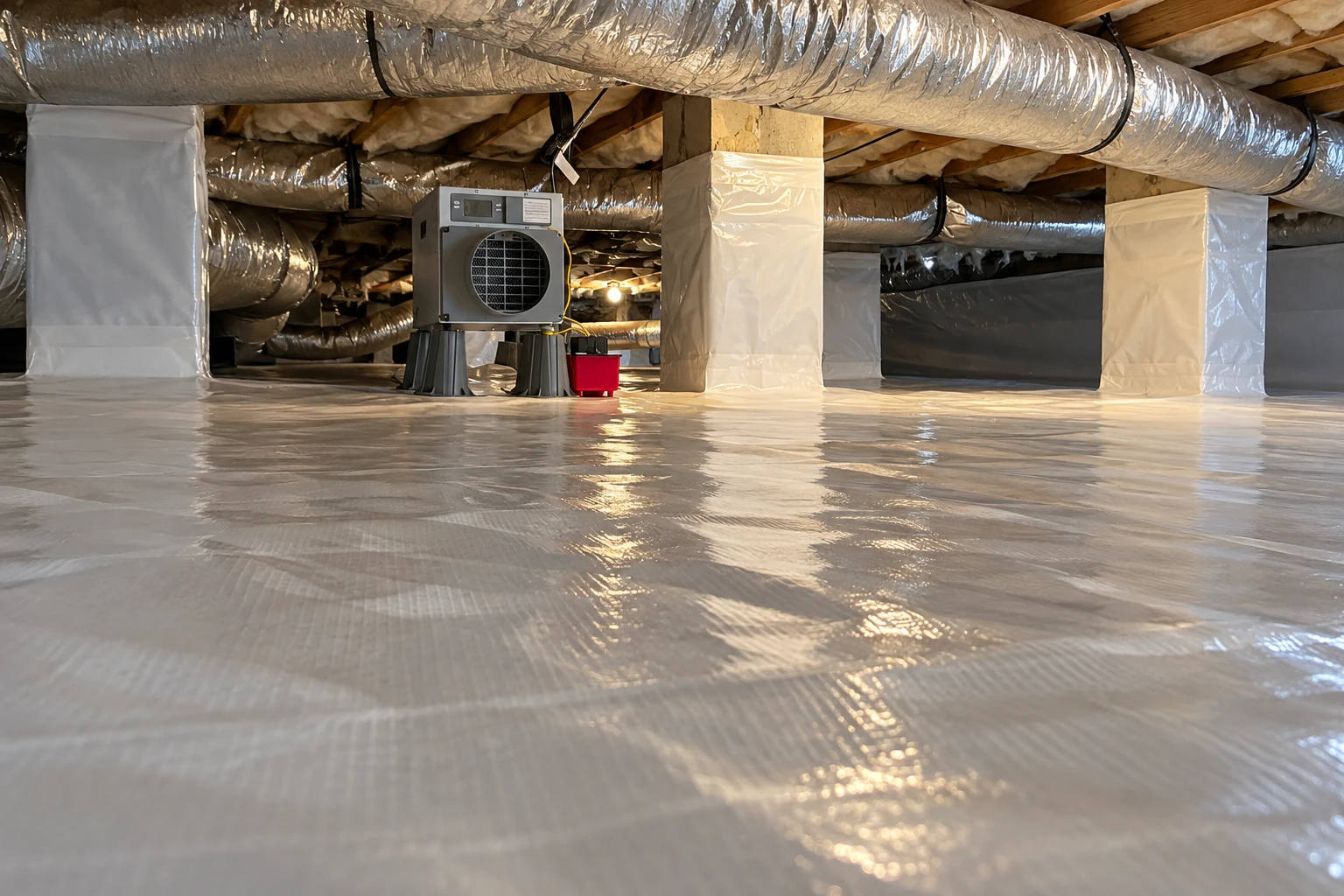
A crawl space vapor barrier is a sheet of plastic that covers the dirt under your house, and in Dallas we install them to keep ground moisture and soil gases from rising into the framing and the rooms above.
Most people call me about a musty smell or a crawl space they'd rather not look at, and the first thing I check is how water gets in. In a vented crawl space it usually comes from ground that slopes toward the house, missing drainage or the way the yard gets watered, and plastic laid over that just hides it, so we plan the water fix along with the liner. The price moves with the size of the space, how much old plastic and debris has to come out, the liner you pick and whether you want a plain ground cover or a fully sealed crawl space, and the schedule mostly turns on any water work that has to come first. Your written estimate gives you our figure, and we're licensed and insured. If the damp is in a wall or a slab instead, that's our vapor barrier installation work.
How do you know your crawl space needs a liner?
Most crawl space trouble shows up in the rooms above it before anyone goes down there. These are the things homeowners tell me about, and what they usually point to under the floor.
A musty smell inside, strongest near floor vents or closets, usually means damp air rising from the crawl space.
Floors that feel cold, soft or springy underfoot can mean moisture is working on the framing below.
Old plastic that's torn, bunched in the corners or missing leaves bare dirt giving off moisture under the house.
Standing water or muddy ground after rain means water is reaching the crawl space and needs fixing first.
Water beads or dark spots on joists and ducts mean humid air is meeting cooler surfaces down there.
Floor insulation sagging or falling between the joists is often wet and heavy, and damp below is the usual cause.
If there's standing water down there or the smell keeps getting worse, call now rather than waiting, because the water has to be sorted out before a liner can help.
What happens when you call about a crawl space liner in Dallas?
I'm the one who comes out and writes the estimate, and our crew does the install. Here's how a crawl space job runs from your first call to the final walk-through.
Call us or send a request
Call (214) 706-4099 or use the form, and we'll set a time for me to come out. Landlords and property managers can tell us how to reach tenants, and we'll work around them.
I crawl in and look
I go under the house myself and check how water gets in, the state of the framing and wiring, and anything else that has to be fixed before plastic covers it. If a liner isn't what your house needs, I'll tell you.
You get a written estimate
It spells out what has to happen first, which liner we'd use, how far it runs and our price for the job. You can take your time with it and compare it with anyone else's.
Our crew installs, I check
Our crew clears the ground, lays and seals the liner, and cleans up after. Then I walk the finished crawl space with you before we call it done.
Get a written estimate for your crawl space liner
Send the form and we'll reply within one business day to set a time. I come out, look under the house and give you a free written estimate, with no obligation to go ahead.
- Call
- (214) 706-4099
- Hours
- Mon–Fri: 8 AM–9 PM, Sat–Sun: 6 AM–9 PM
Crawl space liners, coverage and the sealed option
Thicker, reinforced plastic holds up better than thin, unreinforced sheeting, and the thin stuff needs protection anywhere someone walks to reach equipment. If ductwork, a water heater or other equipment sits down there, we use tougher plastic or protect the path to it, so the next service call doesn't wear a hole by the access door. Ask any contractor which one they're quoting, because the sheets look alike once they're down.
National building guidance favors insulated, sealed crawl spaces in humid climates, because outdoor air coming in through vents can condense on cooler framing. A closed crawl space adds a sealed liner on the floor and walls plus a dehumidifier or conditioned air, and kitchen, bath and dryer exhausts have to end outside it. It's a bigger job, so I start with the water fix and a full liner and suggest sealing only when that won't keep things dry.
Once the ground is clear, we run the liner up the walls and piers as far as it'll reach, which matches installation guidance to cover the space as fully as reasonably possible. Those same piers and walls are where termites show, so earthen mud tubes on them or near utility openings are worth catching before plastic goes over anything. If the house also feels drafty, the gaps up top are a separate fix, and that's attic air sealing.
Crawl space vapor barrier questions from Dallas homeowners
Does a vented crawl space in Dallas need a vapor barrier?
Yes, building guidance says a ground cover belongs in vented and unvented crawl spaces alike, and it also helps keep soil gases out of the house. So the real question at your house is usually how far to go, and whether water has to be dealt with first.
How much does a crawl space vapor barrier cost in Dallas?
Sealing a crawl space's floor, walls and vents usually costs about $3 to $10 per square foot across the US, and that's the market's figure for the full sealed job, not our price. A plain liner is a smaller job than that, while water fixes, clearing out old material and adding a dehumidifier push a job toward the top. Your written estimate gives you our figure for your crawl space.
Who issues building permits for crawl space work in Dallas?
The Dallas building official issues the master permit the city requires before work that alters, repairs, installs or maintains a structure or building service equipment, and the city runs its permitting through DallasNow. We check with the city's building office before we start on your job. When a job needs a permit, we handle the application and the inspections.
What is the best way to prepare a crawl space for a vapor barrier?
Clear it first, because installation guidance calls for removing all plants and any debris that could hurt someone or puncture the liner, such as nails, scrap wood, glass and screws. Our crew does that clearing before any plastic goes down. On your side, a clear path to the access door helps.
Do I need a licensed contractor for crawl space work in Dallas?
Plumbing, mechanical and electrical parts of the job need licensed trades, because the city notes Texas law requires a licensed plumbing or mechanical contractor for that work on a home, even when no permit is needed, and a licensed electrician for electrical work. That comes up when a sealed crawl space needs a new circuit for a dehumidifier or a duct from your system, so ask who's doing those parts.
How do I handle the termite inspection strip with a crawl space liner?
Settle it before the liner goes up the walls, because national guidance says to check with the local building inspector or a pest control professional about rules for a pest control inspection strip at the top or bottom of the foundation wall. It's easier to leave the right gap on install day than to cut the liner back later.
Related work for the rest of the house
Vapor barrier installation
If damp is getting in through a wall, a slab or a room other than the crawl space, a barrier there keeps it out of insulation and framing.
Attic air sealing
Drafts and a hot upstairs usually come from gaps around can lights, pipes and the attic hatch, and we seal those before anyone adds more insulation up there.
Book a look under your house
Call (214) 706-4099 or send a request with the crawl space's rough size, whether it has vents and any standing water you've seen, so I show up knowing what to check first.
Mon–Fri: 8 AM–9 PM, Sat–Sun: 6 AM–9 PM