
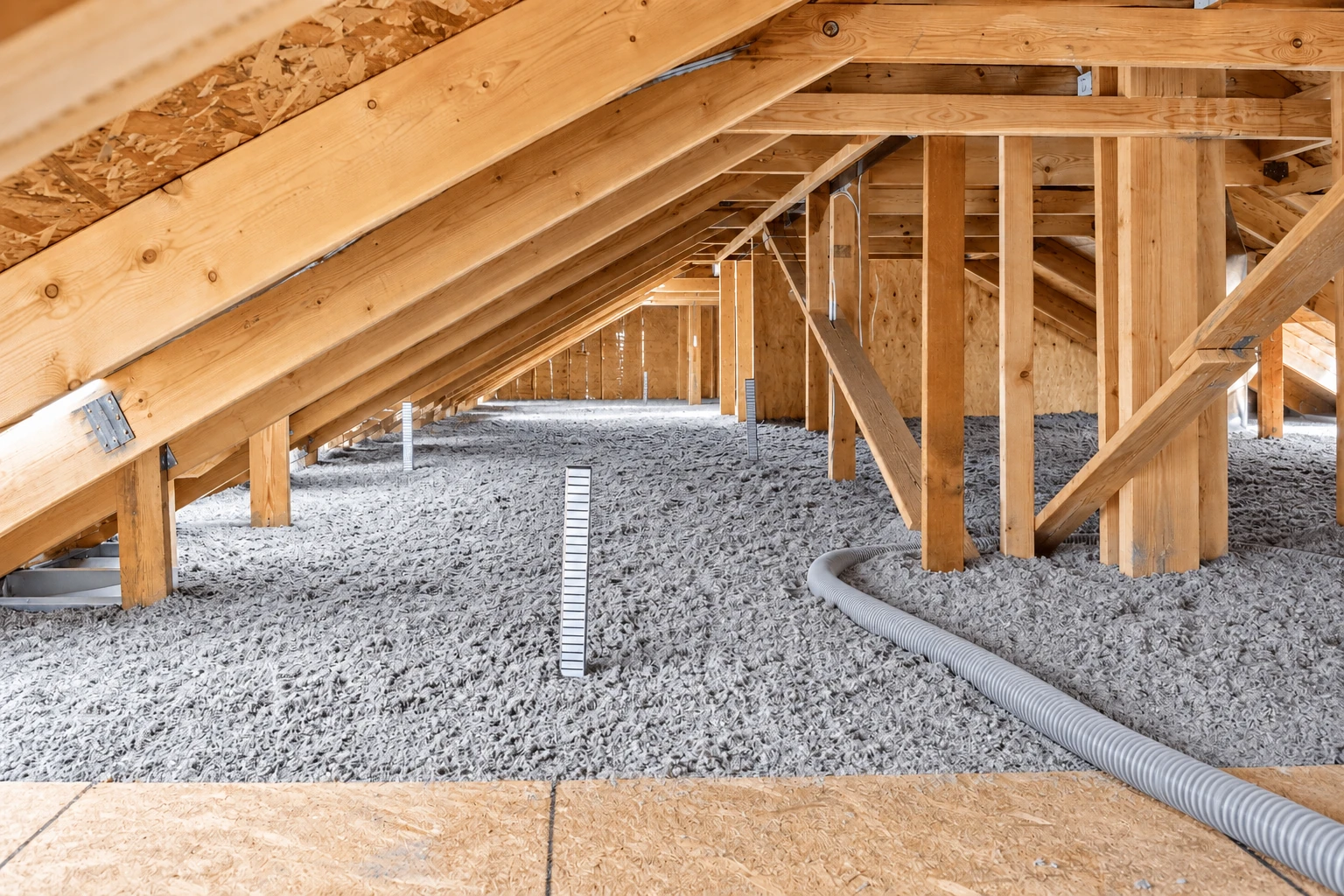
Blown-in insulation in Dallas TX - an attic sealed first and covered evenly
Hot upstairs and a power bill that climbs every summer? We seal the leaks, then blow in an even layer across the whole ceiling.
Is blown-in insulation the right fix for your Dallas attic?
Blown-in insulation is loose fill, usually fiberglass or cellulose, that we blow through a hose across your attic floor to keep summer heat out of the rooms below. On Dallas homes we do air sealing first, closing the gaps around pipes, wires and the hatch, so the new layer isn't fighting a draft.
Most attics I go into already have something up there, just not enough of it, or not where it needs to be. What moves the price is the size of the attic, how many inches are already there, how much sealing it needs and whether the old layer is soaked or full of droppings and needs insulation removal before anything new goes on top. That last part moves the schedule the most too, along with how easy the attic is to get into. If the walls or crawl space need work, I'll say so and we can talk about home insulation for the whole house, and if your attic is fine, I'll tell you that instead. We're licensed and insured, we check with the city's building office before any job starts, and the written estimate gives you the number for your house.
How can you tell your attic needs more insulation?
Most people call us because of how the house feels, not because they've been up in the attic. These are the things homeowners notice first, and what they usually mean once I get up there.
The room over the garage stays hot all afternoon, which usually means thin or missing insulation above it.
The attic joists show through the old layer, so it has settled or was never deep enough.
Your summer power bill keeps climbing with the same thermostat setting, a common sign the attic is letting heat in.
Some rooms feel drafty in winter, which usually points to air leaking through gaps in the ceiling.
The old insulation is stained or full of droppings, so it has to come out before anything new goes in.
Dark streaks on the insulation around can lights or the hatch usually mean air has been leaking through there.
If two or more of these sound familiar, give us a call before the next heat wave, because a thin attic only gets more expensive to live under.
What happens when you call us about blown-in insulation in Dallas?
It's the same order on every job, because the order is the whole point. I look before anyone quotes you a price, and nothing gets blown in until the problems under it are fixed.
Call or send a request
Call (214) 706-4099 or use the form and tell us what you're noticing, whether it's a hot room, drafts or the bill. We'll set a time for me to come out.
I look at the attic first
I go up, check how many inches are already there and look for roof leaks, bad wiring and old insulation that's wet or full of droppings, because all of that gets dealt with before anything new goes in. You get a written estimate that lays out what comes first, what we'll seal, which material we'd use and the price, so there's nothing to guess at.
We seal, then blow it in
Our crew seals the gaps around pipes, wires and the hatch, then blows the insulation in and marks the depth in several spots so you can see it went in even. They clean up the attic and anything we tracked through the house.
Walk the finished job together
When the crew is done, I check the work and walk it with you, depth markers, edges and all. We don't call it done until you've seen it.
Get a written estimate for your attic insulation
Send the form and we'll get back to you within one business day to set a time. I'll come out, look at the attic and give you a free written estimate, with no obligation to go ahead.
- Call
- (214) 706-4099
- Hours
- Mon–Fri: 8 AM–9 PM, Sat–Sun: 6 AM–9 PM
Fiberglass, cellulose or foam for your attic
Most of what we blow is fiberglass or cellulose, with rock wool now and then. Cellulose is recycled paper and cardboard treated with boric acid, which slows fire and keeps bugs out of it. Fiberglass is lighter and won't soak up water the way paper can. Both do the job when they go in at an even depth over the whole ceiling, and I'll tell you which one fits your attic and why.
Foam is the other option, and yes, we're a spray foam company. Foam costs more, and it seals air while it insulates. For most Dallas attics, sealing the gaps and topping up with loose fill does the job for less. The exception is when your ductwork and AC unit live up there, which is common around here, because foam on the roof deck brings them inside the insulated space.
Where it goes matters as much as what it is. The edges near the eaves need the same depth as the middle, but the vents there can't get buried, or the attic stops breathing and moisture shows up in the framing. Baffles, simple guards at the roof edge, hold the insulation back and keep the air moving. The hatch needs its own insulation too, since one maker's instructions call for it to match the attic and loose fill won't stay on a hatch, so I work out what to do with yours before we start.
Blown-in insulation questions from Dallas homeowners
How much does blown-in attic insulation cost in Dallas?
Blown-in attic insulation in Dallas usually costs about $1 to $4 per square foot of attic floor. That's the going rate around Dallas, not our quote, and where your attic lands depends on the material, the depth and how much work comes before the blowing. Call (214) 706-4099 and I'll come give you the number for your house.
Do I need a permit to add insulation in Dallas?
The City of Dallas lists adding insulation as work that doesn't need a permit, except in historic, conservation and planned development districts that have extra requirements. If your house is in one of those districts, tell us when you call. When a permit is needed, we handle the application and inspections with the city, which runs its permitting through its DallasNow online portal.
What is the best way to insulate an attic in Dallas, blown-in or batts?
For most existing attics, blown-in is the better choice, because loose fill usually costs less than batts, the precut blankets, and covers the attic more fully. It flows around wires, braces and odd corners where batts tend to leave gaps, though prices still vary from job to job.
How much can blown-in insulation and air sealing save on my power bill?
On average, sealing air leaks and insulating the attic and other spots can save up to 15% on heating and cooling costs, based on national figures. That number counts both steps together, which is one more reason we seal before we blow. What you actually save depends on how much is up there now and how leaky the house is.
Can blown-in insulation go over can lights?
It can touch can lights that are IC-rated, meaning rated for insulation contact, but one insulation maker's instructions say other cans need a shield to hold it back. We check every light in your attic before we blow anything. If a light has to be swapped or rewired, the City of Dallas says a licensed electrician has to do that work.
How long does blown-in insulation last?
Put in right and kept dry, it lasts a long time, and the cellulose makers' trade group says properly installed cellulose can work well for decades. What cuts it short is water from a roof leak, pests, or a draft through gaps nobody sealed. Cellulose can also settle some after it goes in, so ask any installer how the depth they blow allows for that.
Related insulation work for Dallas homes
Home insulation
If rooms stay hot after the attic is done, the walls or the floor over the garage may be the problem, and we'll look at the whole house.
Insulation removal
When the old layer is soaked from a roof leak or full of rodent droppings, it has to come out first, or new insulation just covers the problem.
Have me take a look at your attic
Call (214) 706-4099 or send the form with your attic's rough size and the kind of can lights you have, so I show up knowing what to look for.
Mon–Fri: 8 AM–9 PM, Sat–Sun: 6 AM–9 PM