
Attic insulation in Dallas TX - sealed first, so the upstairs stays comfortable
Hot upstairs and a power bill that climbs every summer? We seal the gaps first, then insulate your attic so the cool air stays in.
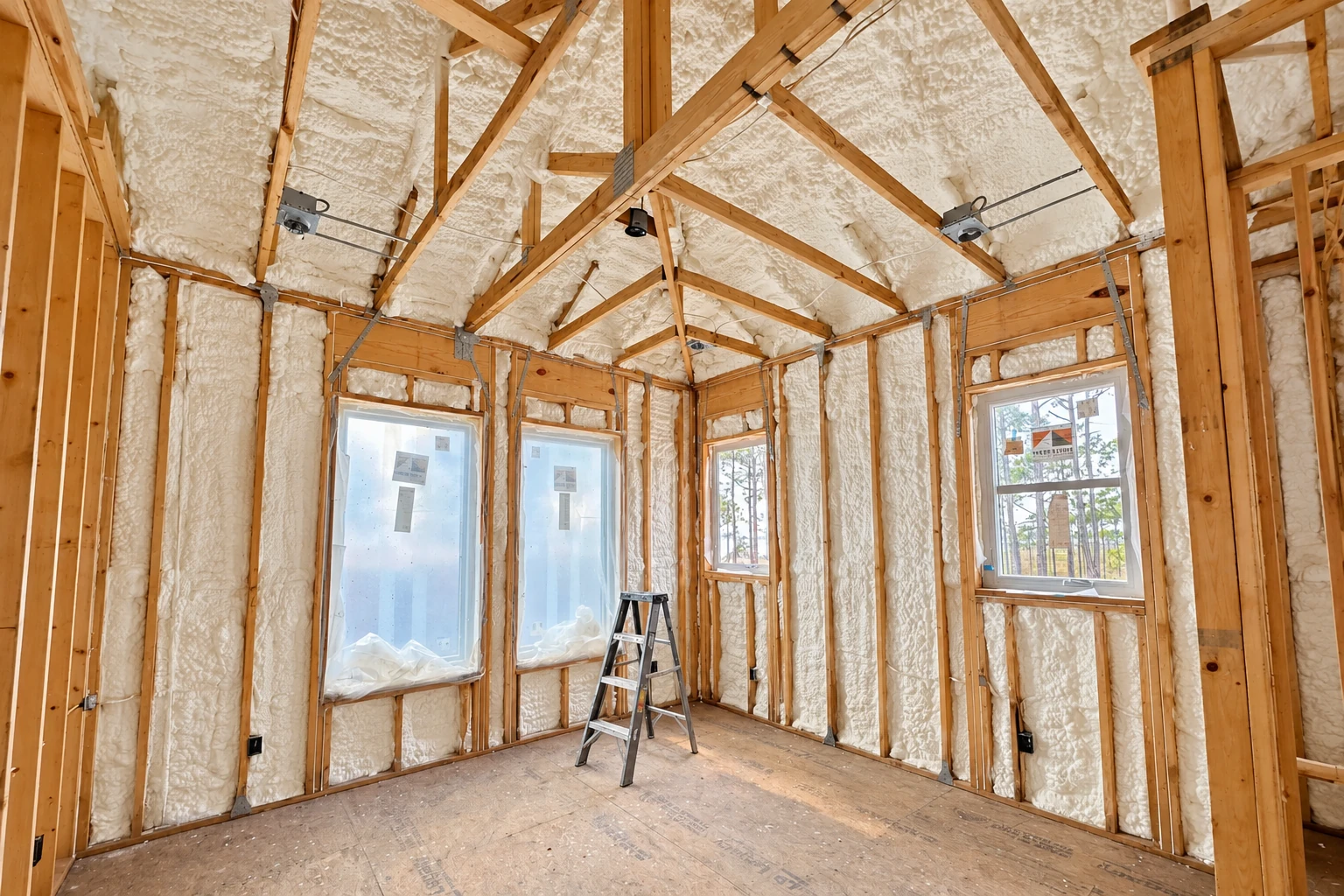
How should you insulate your attic in Dallas, and what will it cost?
Attic insulation in Dallas goes one of two places, on the attic floor or along the underside of the roof and gable walls, and that choice decides which materials fit your house and what the job costs.
If your upstairs is hot by mid-afternoon or the room over the garage never cools off, the attic is usually where the heat gets in. Most of the decision comes down to whether your ducts are up there and what you want to spend, so I lay out both options side by side and let you pick. Price moves with that choice, with how much old insulation is up there and whether any of it has to come out, and with how many gaps around pipes, lights and the hatch need sealing first. The schedule mostly turns on that same cleanup, because nothing new goes over a problem. A floor job is usually blown-in insulation, and if the drafts go past the attic, our home insulation work covers the rest of the house. The written estimate I leave you puts your own number on it.
How can you tell your attic needs more insulation?
Most people call us because of how the house feels, not because they've looked in the attic. These are the things homeowners tell us about, and what they usually point to once I'm up there.
Upstairs rooms run hot all summer while downstairs feels fine, which usually means the attic layer is thin.
The room over the garage is always the worst one, often because its ceiling insulation is thin or missing.
You can see the tops of the attic joists, so the old layer has settled or was never deep enough.
Your power bill keeps climbing and the AC barely shuts off, which often points to heat coming through the ceiling.
Old insulation looks matted, stained or full of droppings, which usually means a roof leak or pests got there first.
You feel drafts around can lights, the attic hatch or ceiling fans, where air leaks straight through unsealed gaps.
If you've spotted stains or droppings up there, call before anyone adds insulation, because new material over a leak or a pest problem just hides it.
What happens when you call us about your attic in Dallas?
I started this business in 2017, after years of crawling through attics for a property management company. We're based in Dallas and work across the city and the cities around it, and every job runs the same way.
Call or send a request
You call or send a request, and we get back to you to set a time for me to come out. Landlords and property managers can tell us how to reach tenants, and we'll work around them.
I check the attic first
Before we talk materials, I look for live knob-and-tube wiring, vermiculite, old leaks and droppings, because insulation doesn't go over any of them. Then you get a written estimate that lays out the attic floor and the roofline side by side, with the sealing work spelled out in it.
Our crew seals, then insulates
Our crew closes the gaps around pipes, wires and the hatch, keeps the eave vents clear and carries the insulation full depth out to the edges, where it's usually thin. Can lights rated IC can have insulation against them, and the rest get shields so it stays clear of the fixture and its box.
We walk the finished attic
Our crew cleans up, and I go up and check the work before I walk it with you. We don't call it done until you've seen it.
Get your attic floor and roofline options priced
We'll get back to you within one business day to set up a visit. I come out, check the attic and leave you a free written estimate, with no obligation to go ahead.
- Call
- (214) 706-4099
- Hours
- Mon–Fri: 8 AM–9 PM, Sat–Sun: 6 AM–9 PM
Attic insulation materials and how they go in
On the attic floor, we usually use blown-in cellulose or fiberglass, loose fill blown through a hose so it gets down around joists and wires. That's the usual fit for a vented attic, one that breathes through vents at the eaves. Loose fill settles over the years and can lose a good share of its R-value, the measure of how well it slows heat, so a thin old layer is often a top-up rather than a tear-out.
At the roofline, the insulation goes against the underside of the roof deck, usually spray foam or rigid foam board, and the attic stops venting to the outside. Open-cell foam is lighter and softer, and closed-cell foam is dense enough to block moisture too. Either way, foam seals air as it goes on, so the sealing and the insulating happen in one pass instead of two.
Attic insulation questions from Dallas homeowners
How much does attic insulation cost in Dallas?
Installing attic insulation in Dallas usually costs about $1,500 to $4,800 per job, and that's the usual range in the area, not our price. Where your house falls comes down to the things I covered up top, mainly floor or roofline and how much has to be cleaned up first, and the written estimate gives you your own figure.
What is the best way to insulate an attic in Dallas, the floor or the roofline?
For most houses it's the floor, because insulating the floor of a vented attic generally costs less than insulating at the roofline, and blown-in fiberglass or cellulose costs less than foam. If your heating and cooling equipment sits in the attic, an unvented attic insulated at the roofline will be much more efficient, because the ducts and air handler end up inside the insulated part of the house. My take is that sealing the gaps and topping up loose fill usually wins, unless the ductwork lives up there.
Should air sealing be done before adding attic insulation?
Yes, seal first. One blown-in fiberglass maker's installation instructions say air sealing, closing the gaps where air leaks through, should be finished before the insulation goes in so the insulation can do its full job. That's the order we run our attic jobs in, and the sealing is written into the estimate, not added later.
How do I know if my old attic insulation has to come out first?
It has to come out, or the job has to wait, if it's soaked, full of droppings or turns out to be vermiculite, the pebbly gray-brown kind that may contain asbestos. Vermiculite stops the work until it's dealt with, and live knob-and-tube wiring has to be replaced with modern wiring before any insulation goes in. That's the first thing I check on the visit, because fresh material over a problem just hides it.
Do I need a permit for attic insulation in Dallas?
I check with the city's building office before we start, so you don't have to sort that out yourself. The City of Dallas issues residential permits as its approval to start construction, renovation or major repairs on a home, and on a remodel permit it requires a Compliance Certificate at the end of the project. When a job needs a permit, we handle the application and the inspections with the city, and we're licensed and insured.
Do I have to insulate the attic when I replace my roof in Dallas?
Sometimes, yes. When a reroof exposes the sheathing, the boards under the roofing, on a roof with no insulation in the rafter space, the city requires insulation above or below that sheathing. If a new roof is coming, tell me when I'm out so we can plan the attic around it.
Related insulation work around the house
Blown-in insulation
If your attic just needs more depth over a clean, dry layer, blown-in loose fill is usually the simplest, lowest-cost way to bring the floor back up.
Home insulation
When the drafts and hot rooms go beyond the attic, we look at the walls, floors and crawl space so the whole house holds temperature.
Attic air sealing
If the insulation looks fine but rooms still feel drafty, the gaps around lights, pipes and the hatch may need sealing on their own.
Insulation removal
When the old layer is soaked, matted or full of droppings, it has to come out before anything new goes in, or the problem stays.
Book a look at your Dallas attic
Call (214) 706-4099 or send a request, and mention whether your ducts are in the attic and whether you have can lights, so I come ready to price both options.
Mon–Fri: 8 AM–9 PM, Sat–Sun: 6 AM–9 PM