
Attic air sealing in Dallas TX - gaps closed before the insulation goes in
Hot upstairs rooms, drafts and dust usually trace back to gaps into the attic. We seal them first so your insulation can work.
Does your Dallas attic need air sealing before more insulation?
Attic air sealing in Dallas means closing the gaps between your rooms and the attic, so the air you pay to cool and heat stays in the house and attic heat, dust and pests stay out. It's the step that comes before insulation, and it's the one that gets skipped most often.
Most people call because the upstairs runs hot, a hallway feels drafty or the room over the garage never cools off, and they figure the attic needs more insulation. Sometimes it does, but insulation slows heat and doesn't stop air, so we seal the gaps first and then talk about adding insulation to an older house if it's still needed. What moves the price is the size of the attic, how many lights, pipes and vents come through the ceiling, how tight it is to crawl around up there, and whether old, dirty insulation has to come out to reach the gaps. The schedule mostly turns on what has to happen first, like a safety check on a gas appliance, old wiring or a permit, and my written estimate lays out what we'll seal and what it costs.
How can you tell your attic needs air sealing?
Most attic leaks hide under the insulation, so you notice them from below first. These are the things homeowners usually tell me about before I've even opened the hatch.
Upstairs bedrooms stay hot while downstairs feels fine, which usually points to leaks through the ceiling.
You feel a draft around ceiling lights, the attic hatch or bathroom fans, where gaps are most common.
The power bill keeps climbing and the AC runs nonstop, often because cooled air is slipping into the attic.
Dust settles again soon after you clean, which can mean attic air is pulling in through ceiling gaps.
You see dark, dirty patches on the attic insulation, which usually mark spots where air filters through.
You hear scratching overhead or find droppings in the attic, a sign pests are using gaps to get in.
If you're noticing more than one of these, call before you add insulation, because burying the gaps under new material only makes them harder to reach later.
What happens when you call us about attic air sealing in Dallas?
I look at every attic myself before there's a price, and our crew does the work after that. Here's how a job usually runs from the first call to the walkthrough.
Call or send a request
Call (214) 706-4099 or send the request form, and we'll get back to you to set up a time. Tell us what's bothering you, like a hot room or a drafty hallway, so I know where to look first.
I inspect the attic first
I go up, find the gaps, check that the vents are clear and look for anything that has to come first, like a gas appliance that needs a safety test or wiring that can't be covered. You get a written estimate listing what we'll seal, what we'll use and what it costs, so you see the whole price before anyone starts.
Our crew seals the gaps
Our crew does the sealing, plus any insulation you've signed off on, and lays down covers under the hatch before they go up. They clean up the attic and the path through your house when they're done.
I walk the finished job
I check the crew's work, then walk the finished job with you before we call it done. If anything doesn't look right to you, that's the time to say so.
Get a written estimate for sealing your attic
Send the form and we'll reply within one business day to set a time for me to look at your attic. The on-site estimate is free and written, and there's no obligation.
- Call
- (214) 706-4099
- Hours
- Mon–Fri: 8 AM–9 PM, Sat–Sun: 6 AM–9 PM
Sealing materials and what goes where in your attic
Most of the sealing is small, patient work. Narrow gaps around wiring, pipes and light fixtures get caulk or canned foam, and bigger openings, like the boxed-in ceiling over kitchen cabinets or an open shaft where ducts run up, get rigid board cut to fit and sealed in place. Around chimneys and gas vents we switch to heat-rated caulk or foam and build a heat-safe dam so insulation stays clear of the hot surface.
Some openings are supposed to be there. Soffit, ridge and gable vents keep air moving through the attic, and a combustion air duct feeds a gas appliance the air it burns, so we leave every one of them open. Seal those and you trade a draft for damp framing or a furnace that can't breathe, which is a worse problem than the one you called about.
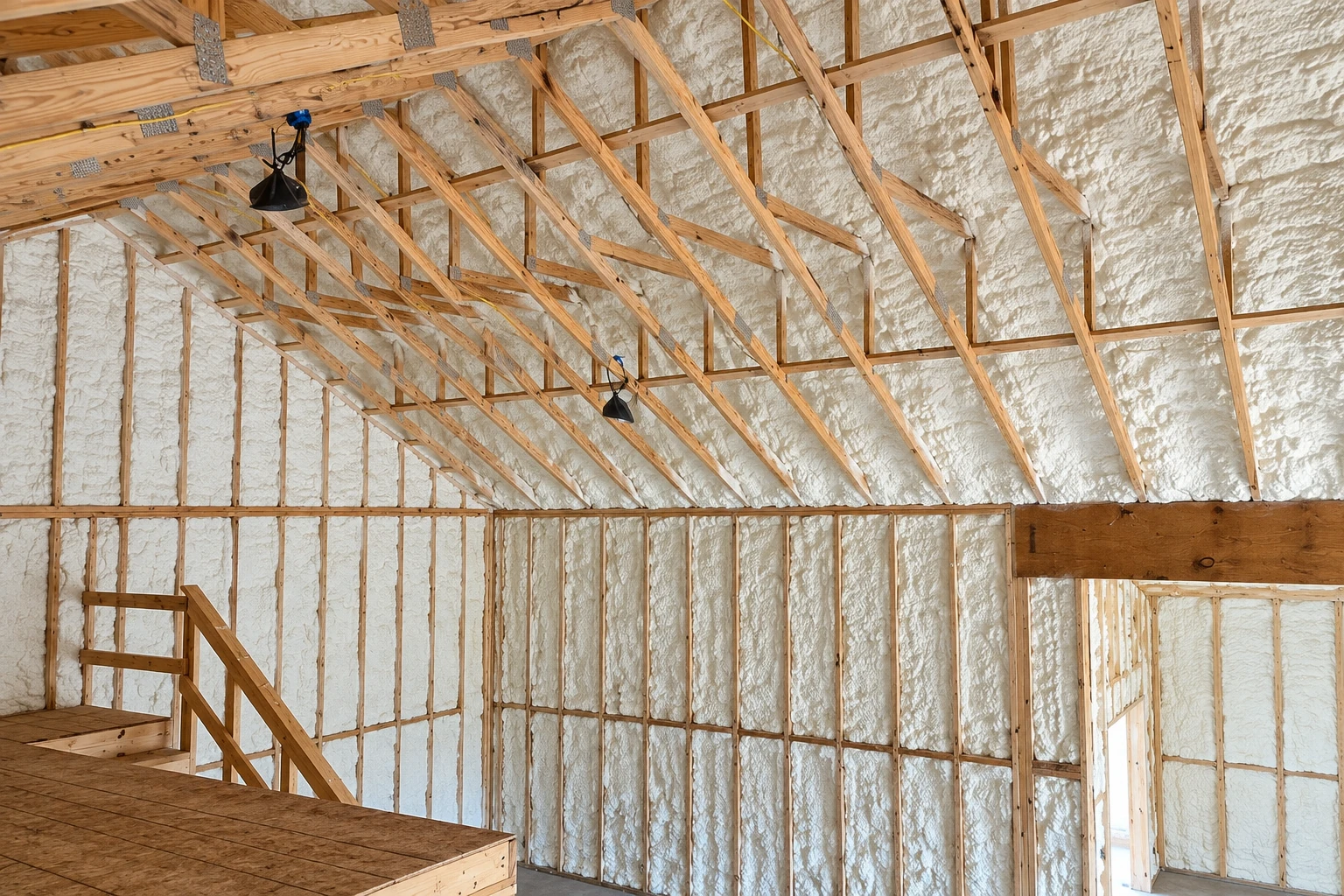
Spray foam is the other way to go. Spray foam insulation seals and insulates in one pass, but it costs more, and for most attics, sealing the gaps and topping up the loose fill does the job for less. The exception is when your ductwork and air handler live in the attic, because foaming the roofline brings them inside the insulated space, and that's when I'd point you toward foam.
Attic air sealing questions from Dallas homeowners
What does attic air sealing involve?
It means finding and closing the openings between your living space and the attic, around light fixtures, wiring, plumbing pipes, flues and the duct boots where your vents come through the ceiling. Done together with insulation, it's one of the most cost-effective upgrades a house can get, and it usually means lower heating and cooling bills, fewer drafts, and less moisture, dust and pests getting in.
What is the best way to air seal an attic before adding insulation?
Seal first and insulate second, because that's how the insulation delivers the most energy savings. The usual guidance for attic upgrades deals with combustion safety and indoor ventilation first, then the attic's ventilation and long-term durability, and finishes all the sealing before any insulation goes down. That's the order we work in, and it's why I look at the whole attic before talking about a top-up.
How do I know if my gas appliances need a safety test before attic work?
If your furnace or water heater is natural draft, venting its exhaust up a flue on its own rising heat, the house gets a combustion safety test before attic work starts. The test checks whether exhaust is backdrafting or spilling into the house, and any problem it finds gets fixed before the attic work goes ahead. I'll ask about your appliances when I come out, so you can plan for that step first.
What happens if my attic has knob and tube wiring or vermiculite insulation?
The job pauses until it's dealt with. Insulation goes in only after any live knob and tube wiring, the old kind strung on ceramic posts, is replaced or properly boxed in by an electrician. If the old insulation is vermiculite, a loose, pebbly gray-brown fill, work stops because it may contain asbestos, and I'll tell you that plainly rather than have anyone stir it up.
Do I need a permit for attic air sealing in Dallas?
The city's list of work that doesn't need a permit names adding insulation but not attic air sealing, so I check with the City of Dallas building office before we start instead of guessing. The city requires a master permit before anyone builds, alters, repairs or installs equipment in a house, and homes in historic, conservation and planned development districts can have extra requirements. If your job needs a permit, we handle the application and inspections through DallasNow, the city's online permit portal. Texas law requires a licensed plumbing or mechanical contractor for that work on a home even when no permit is needed, electrical work goes to a licensed electrician, and we're licensed and insured for our own work.
How much does attic air sealing cost in Dallas?
The cost depends on what's up there, so I price it after I've seen your attic rather than guess over the phone. The written estimate lists the gaps we'll seal and the materials we'll use, so you can see what you're paying for. If your attic doesn't need much, I'll tell you that too.
Insulation work that often goes with sealing
Retrofit insulation
If your house is older and the attic only has a few inches of worn insulation, retrofitting adds what's missing once the gaps underneath are sealed.
Spray foam insulation
If you're finishing the room over the garage or want one job that seals and insulates together, foam handles both in a single pass.
Book an attic check before you insulate
Call (214) 706-4099 or send the form, and mention any chimney, gas vent, old wiring or vermiculite you know is up there so I can plan around it before I climb the ladder.
Mon–Fri: 8 AM–9 PM, Sat–Sun: 6 AM–9 PM